

Content Contributed by: Wendy Busse-Coleman
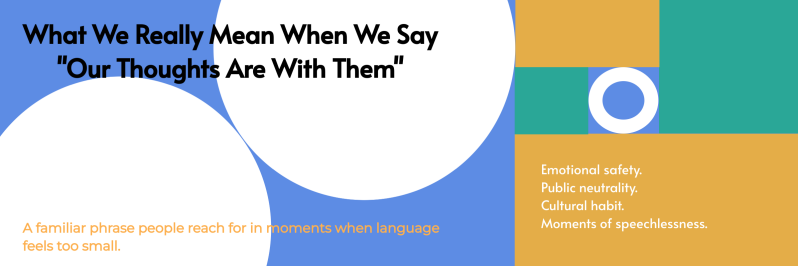
In moments of profound tragedy, a particular phrase often emerges. Whether it concerns a fire, a vehicular accident, or an unexpected loss, there is a headline that can halt one’s engagement with their digital environment.
"Our thoughts are with them."
I’ve said it. You’ve probably said it. We hear it from officials, organizations, and everyday people trying to respond to something that feels too big for words. But lately, I’ve been thinking about what this phrase truly means, and why it sometimes offers comfort, while other times it feels like a placeholder we toss into the air because we don’t know what else to say.
However, on the other hand, since it's used so frequently, it can sometimes start to feel routine or empty, especially after significant tragedies or ongoing crises.
What We're Really Trying to Say
Most of us reach for this phrase because we’re trying to communicate something simple and human:
- I see what happened.
- I’m aware of your pain.
- I’m holding you in my mind right now.
It’s a way of acknowledging someone’s suffering without stepping into their story or assuming we know what they need. It’s gentle. It’s respectful. And in moments when details are still unfolding, it’s a safe way to express care without getting anything wrong.
But it’s also broad, so broad that it can start to feel like a reflex instead of a response.
Why It Shows Up Everywhere
Part of why this phrase is so common is that tragedy often leaves people speechless. We want to find the right words, but we’re careful not to say something inappropriate. So, we tend to stick with what we know.
It’s also the language of institutions. Public statements need to be careful, neutral, and non-intrusive. “Our thoughts are with them” checks all those boxes.
And then there’s habit. Once a phrase becomes part of the cultural script, it repeats itself without much examination.
When It Helps, and When It Doesn't
There are moments when this phrase is exactly right. When you don’t know the family personally. When the situation is still unfolding. When you want to acknowledge pain without assuming closeness.
But there are also moments when it falls short, especially when the people grieving are right in front of you, or when the community is aching for something that feels more personal, more grounded, more human.
Sometimes what people need isn’t a phrase; they need presence. They need someone to sit beside them in the quiet. They need a casserole on the porch or a text that says, “I’m here. Truly.”
What We Can Say Instead
If you’ve ever hesitated before typing “Our thoughts are with them,” you’re not alone. There are other ways to express care that feel more like a person speaking to another person:
- “I’m holding this family close in my heart today.”
- “We’re grieving with them.”
- “I’m thinking of them as they navigate the days ahead.”
- “I’m here if they need anything.”
- “This is heavy, and I’m standing with them.”
- “We’re here to support them in whatever way we can.”
While none of these are magic solutions, they bring a bit more warmth, a touch more intention, and just that little extra of the human voice we all long for when life feels like it's opening up in unexpected ways.
Why This Matters
Language shapes how we show up for one another. When tragedy hits, people don’t need perfect words; they need honest ones. They need to feel seen, not managed. They need to feel held, not handled.
“Our thoughts are with them” isn’t wrong. It’s just incomplete. And maybe the invitation for all of us is to slow down, choose words that match the moment, that is felt in the heart, and let our compassion sound like it comes from a real person. Not a script.

Add comment
Comments